Capsizing and Sinking of Fishing Vessel Hotspur
Nunez Point, AK · August 2, 2022
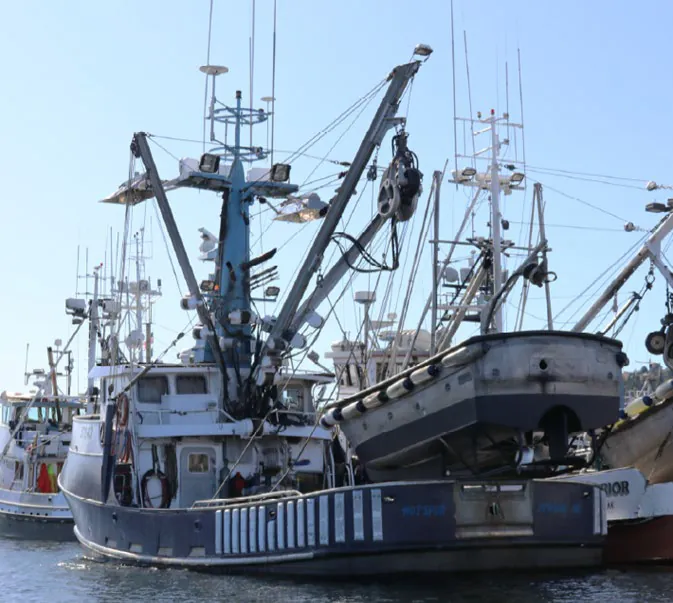
What happened
On August 2, 2022, about 1955 local time, the fishing vessel Hotspur developed a list, capsized, and sank while transiting west through Dixon Entrance near Nunez Rocks, off the southern tip of Prince of Wales Island, Alaska. The captain and four crewmembers abandoned the vessel to a liferaft and were rescued by two Good Samaritan vessels. There were no injuries. Multiple sheens were reported. The Hotspur, which was declared a total loss, had an estimated value of $1.2 million.
Probable cause
We determined that the probable cause of the capsizing and sinking of fishing vessel Hotspur was flooding from an unknown source into the lazarette or the port void space, causing the vessel to lose stability, capsize, and sink.
Lessons learned, as the NTSB states them
Testing of High-Level Alarms and Sensors
Automatic high-water bilge alarms are intended to provide crews with an early warning of vessel flooding. Manual detection (e.g. visually) often occurs only after flooding is underway and the crew has detected excessive rolling or listing, leaving little time for mitigating action. In inaccessible spaces, or small spaces with limited ability to inspect underway (such as a fishing vessel’s smaller compartments, voids, or lazarette), bilge-level-monitoring alarms are often the sole means to alert operators of flooding. Operators should periodically test bilge high-water alarms and follow best marine practices and manufacturer recommendations for inspection and maintenance.
More capsizing investigations
- Capsizing and Sinking of Yacht Bayesian · Near Sicily · Mediterranean Sea, 2024
- Listing and Partial Sinking of Yacht Lovebug · Shady Side, MD · West River, 2024
- Capsizing of Dredging Vessel WB Wood · Meraux, LA · Lower Mississippi River, 2023
- Capsizing of Small Boat from Passenger Vessel World Explorer · Elephant Island, 2022
- Capsizing and Sinking of Crane Barge Ambition, Towed by Karen Koby · Freshwater Bayou, LA · Gulf of Mexico, 2022